Control4’s approach
Control4 provides a standardized residential operating model with CORE controllers, Halo remotes, touchscreens, apps, room navigation, and dealer programming. Its consistency can shorten the path to a polished result while still supporting substantial customization through drivers, scenes, and programming.
Crestron Home’s approach
Crestron Home combines a configurable residential platform with Crestron’s broader control, lighting, shading, AV-over-IP, audio, and interface portfolio. It is particularly strong when the property needs deep Crestron infrastructure or when residential control must coordinate with unusually complex AV and architectural requirements.
Reliability is designed
Both platforms can be highly reliable when the processor, network, power, thermal management, lighting layer, drivers, and programming are properly engineered. Reliability comparisons should examine local control, failure domains, spare capacity, backups, documentation, and recovery—not only processor specifications.
Ease of use and customization
Control4 often offers a more uniform experience across projects. Crestron Home also provides a consistent interface, while the wider Crestron ecosystem can support more specialized design. More customization is valuable only when it solves a real workflow and remains documented; unnecessary complexity makes future service harder.
How to compare proposals
Provide both integrators the same room list, subsystem scope, interface requirements, performance criteria, and service expectations. Compare what is included, which devices are native or third-party, programming ownership, subscriptions, commissioning, training, documentation, and support. Skynet Domotics recommends the architecture only after confirming those details.
How we apply this
At Skynet Domotics, we design, install and program control platforms. We first define routines, rooms, existing equipment, privacy preferences and support expectations, then verify which platform and integrations fit best. Our recommendation is not based on one brand alone and is documented by model, software version and scope.
Explore the related service or request an assessment for your home.
Smart-home installation · Request a consultation
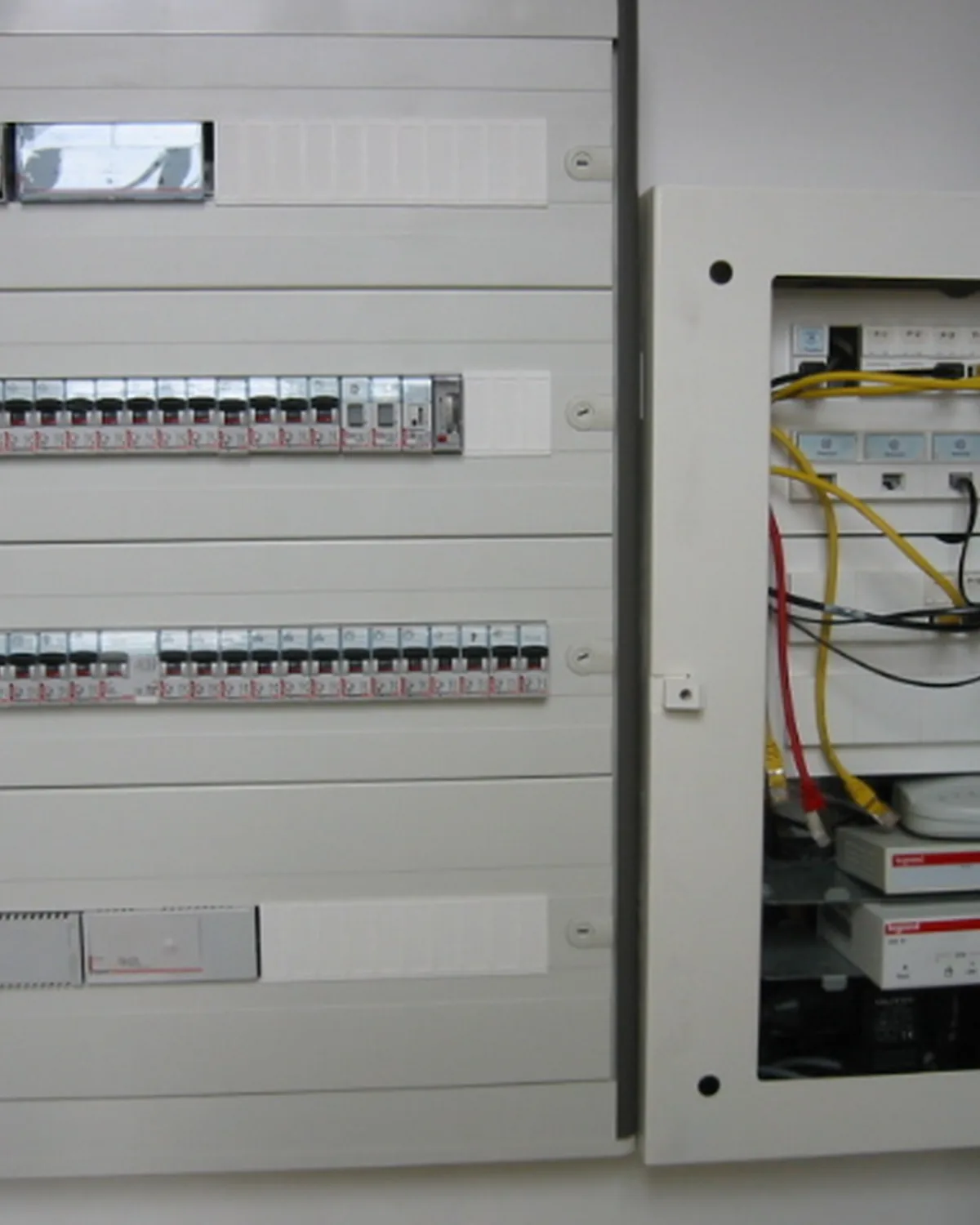
Image credit: Arnaud 25, CC BY-SA 3.0